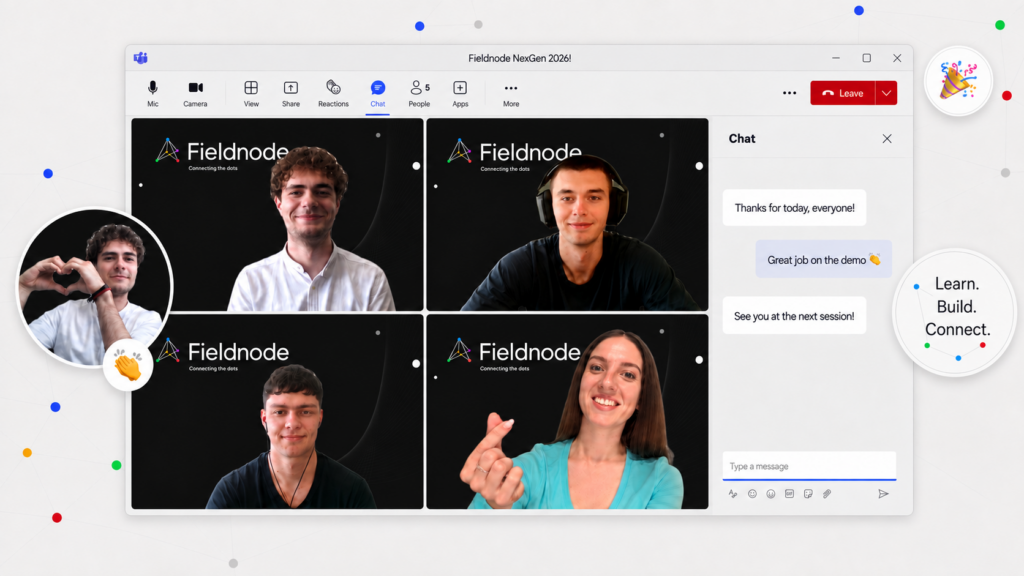
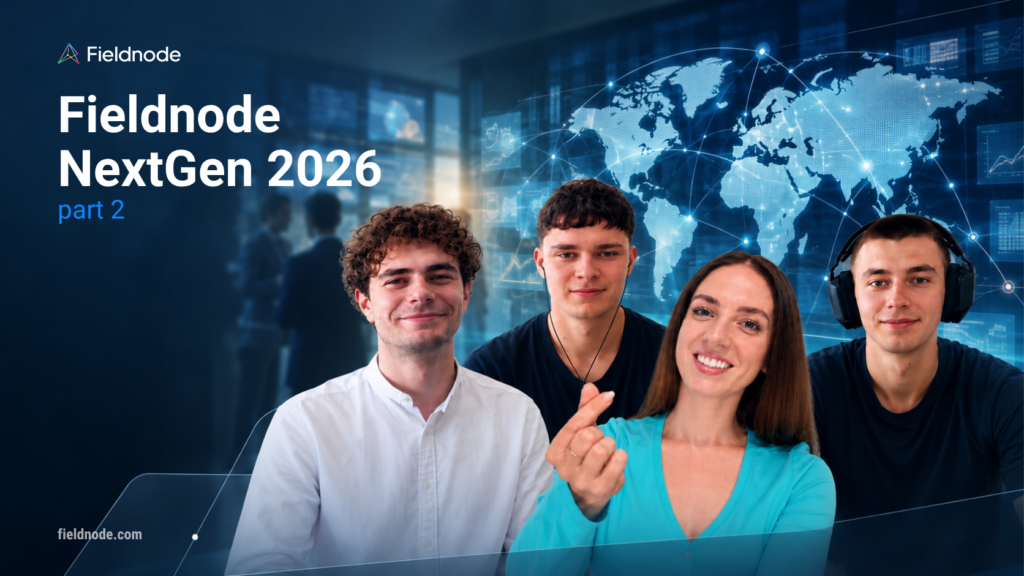
Earlier this year, we introduced the students taking part in Fieldnode NextGen 2026 and shared how the programme gives future engineers the opportunity to learn through real engineering challenges.
As the programme progresses, each participant continues along their own development path. While every student follows the same learning principles, they work on different projects, gain experience with different technologies and gradually take on new responsibilities.
One of the first milestones for the current group was completing a structured product development assignment before joining ongoing product initiatives.
Building the Foundation
Before contributing to Fieldnode products, the students were challenged to build a complete web application from a professional product specification.
The project required far more than implementing individual features. Participants learned how to interpret product requirements, translate specifications into working functionality, design responsive user experiences and deliver a complete solution that met defined quality expectations.
Working from a detailed specification introduced them to the way modern product teams communicate ideas, structure development work and collaborate around a shared product vision.
More importantly, it helped establish the engineering mindset needed before contributing to larger software projects.
From Training Project to Product Development
With this milestone completed, the students are now moving beyond training assignments and beginning to contribute to ongoing Fieldnode development projects.
Instead of working with predefined learning exercises, they are gradually becoming part of real engineering workflows, collaborating with mentors and supporting product development across different initiatives.
Each student now follows an individual development path depending on the project they have joined. This allows them to deepen their technical skills while learning how different engineering disciplines contribute to building scalable digital products.
Learning Through Different Challenges
Although the participants started from the same foundation, they are now working on different tasks that reflect the diversity of modern product development.
Some projects focus on user experience and product functionality. Others involve data processing, engineering workflows or supporting capabilities that strengthen the broader Fieldnode ecosystem.
This approach gives every participant exposure to different challenges while contributing to a common goal: building reliable products that create value for industrial customers.
Student Perspective
“The main reason I started my internship at Fieldnode was to gain technical experience from highly qualified developers, get real commercial experience, and learn about the tools and technologies that are widely used in the industry today.
I can confidently say that the internship has met all of my expectations. I have received a lot of support and guidance from my mentors, which has helped me become more competent and confident in software development. Their feedback and corrections have made my learning process more productive and helped me better understand how to approach real-world development tasks.
In the near future, I hope to become a part of the FieldNode development team, contribute to the company, and bring some new and innovative ideas to the projects.”
Kostiantyn Kavatsiuk
“I’m really enjoying my internship experience so far. It’s great to be part of a team with a professional and friendly working environment, experienced mentors, and people who are always willing to share their knowledge and help me grow.
I’m learning a lot, gaining valuable hands-on experience, and getting involved in company meetings and real team processes. I’m very grateful for this opportunity and excited to continue learning, improving, and contributing to the team!”
Dmytro Andreiko
“When I started my internship, I had two completely different feelings at the same time: excitement about being here and a certain fear – what would happen next?
The beginning always means a lot of new things: new people, new processes, new technologies, and a lot of information that needs to be gradually understood and organized. But daily teamwork, discussions about goals and tasks, constant focus, and support from the team really work wonders – it is motivating!
Right now, I have a project that I need to implement. It is divided into smaller and more understandable steps that I work on every day. And this is exactly what I really like about the process: I’m not just moving from one task to another, but at the same time I’m learning, exploring new things, and gradually starting to see the bigger picture.
Every day, we discuss what has already been done, what blockers or challenges we have faced, and what the next step will be. This constant movement and teamwork help me stay focused and keep moving forward. And this is probably one of the things I like the most.
I am still at the beginning of this journey, and I know that there is still a lot of new, challenging, and unfamiliar things ahead. But now, the fear of “what will happen next?” is gradually turning into curiosity. Because every day, I want to figure out one more task, understand one more process, and take another step forward.
And perhaps this is what real learning through practice looks like for me right now: when you don’t just gain knowledge, but immediately try to apply it, ask questions, look for solutions, sometimes make mistakes – and move forward precisely because of them.”
Ivanna Kostur
“My internship at Fieldnode has left me with nothing but positive and warm impressions. This is probably the kind of opportunity that everyone who is just starting their career in IT dreams about.
Throughout the internship, we have experienced mentors who are always ready to answer all of my questions – and sometimes there are quite a lot of them. They are very open and approachable people, which makes communication easy. This is a huge advantage, especially when everything is still new and unfamiliar. It is great to feel not just like an intern, but like a part of something bigger.
I would also like to highlight the learning process itself. We are given a lot of high-quality information and resources for productive learning. We have meetings every day, where the mentors help adjust our learning direction and point out the areas we should focus on more.
This is especially important to me because courses can teach you how to program, but they cannot fully give you an understanding of real-world architecture or the invaluable experience that comes from working with experienced professionals.
I am very grateful to the company for this opportunity and to all the wonderful people who support and guide me along the way.”
Ihor Milinchuk
Mentor Perspective
“One of the most rewarding parts of mentoring this group has been seeing how quickly they have grown from solving guided learning tasks to taking ownership of real engineering challenges. Each student has developed in their own way, but they all share the same curiosity, willingness to learn, and commitment to improving every day.
Technical skills are important, but they are only one part of becoming a great engineer. The ability to ask questions, understand the problem before writing code, communicate openly with your team, and continuously learn is what makes the biggest difference over time.
My advice to every student is simple: stay curious, don’t be afraid to make mistakes, and always focus on understanding why something works – not only how. Technology will continue to evolve, but the mindset of continuous learning and collaboration will always remain one of the most valuable skills you can develop.”
Stanislav Mantach, Head of Product
Growing Through Responsibility
One of the key objectives of Fieldnode NextGen is to gradually replace guided learning with real responsibility.
As students gain confidence, they become increasingly involved in planning, implementation, reviews and continuous improvement alongside experienced engineers.
This transition helps bridge the gap between education and professional software development while giving participants first-hand experience of how modern product teams collaborate.
Looking Ahead
The completion of the first development project is not the end of the learning journey – it marks the beginning of the next stage.
As Fieldnode NextGen 2026 continues, the students will contribute to increasingly complex product initiatives, expanding both their technical capabilities and their understanding of how successful digital products are built.
At Fieldnode, we believe future engineers develop best by combining structured learning with meaningful responsibility. By progressing from guided projects to real product development, participants gain the experience, confidence and engineering mindset needed to contribute to modern industrial software.