Ukraine’s reconstruction is one of Europe’s most significant long-term infrastructure and industrial challenges. Beyond restoring what has been damaged, it presents an opportunity to rethink how critical infrastructure is maintained, industrial assets are supported, and supply chains are organised for the future.
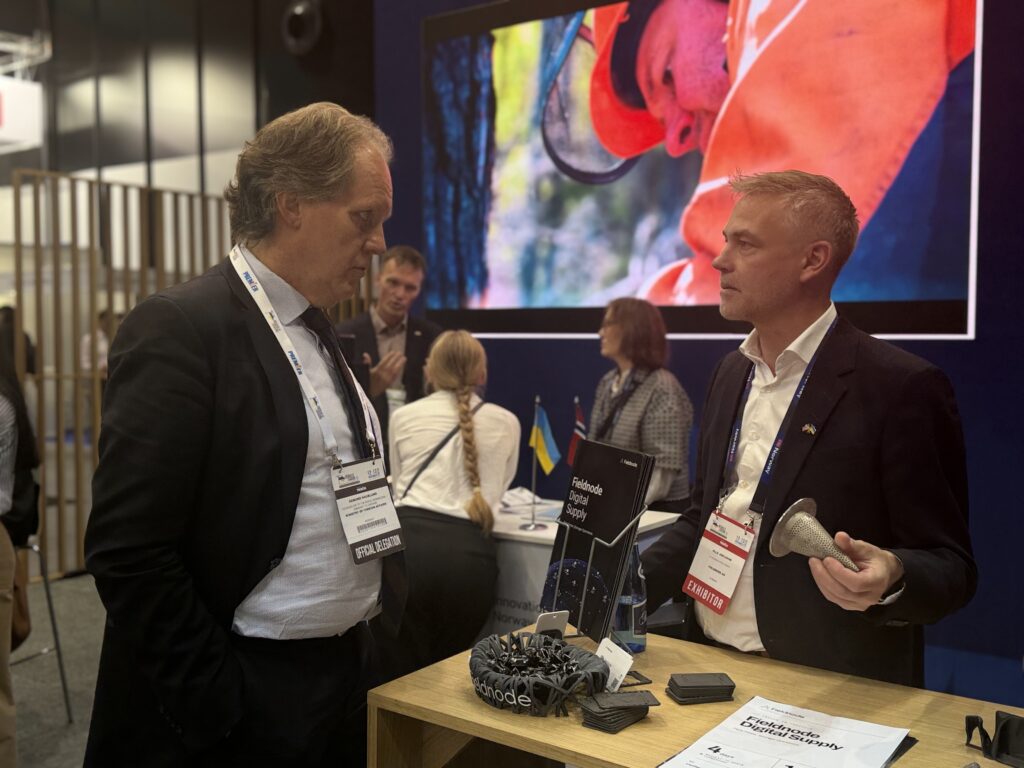
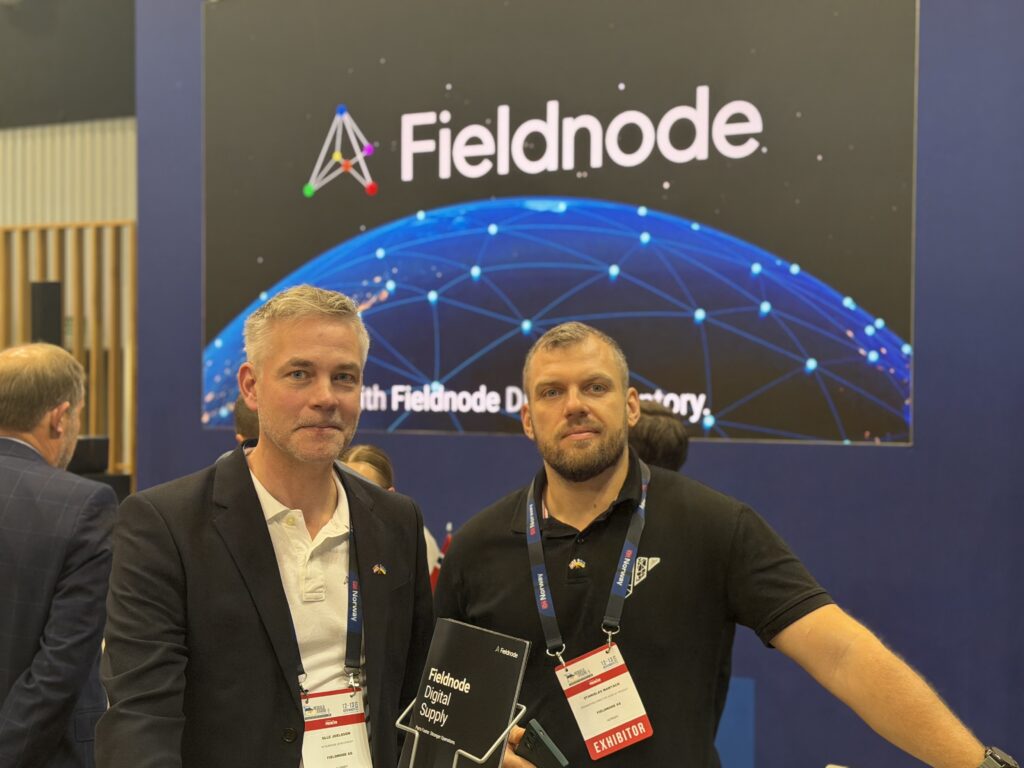
On 12–13 November, Fieldnode participated in ReBuild Ukraine 2026 in Warsaw, joining businesses, industry representatives, financial institutions, and organisations discussing Ukraine’s recovery and long-term economic development.
The event highlighted both the scale of the reconstruction effort and the importance of international industrial cooperation in supporting it.
For Fieldnode, these discussions reinforced an important perspective: rebuilding industrial infrastructure is not only about constructing new facilities and replacing damaged equipment. It is also about ensuring that industrial systems can operate reliably, access critical components, and remain resilient over time.
Reconstruction on an Unprecedented Scale
Ukraine’s recovery and reconstruction needs were estimated at approximately $524 billion over the decade ahead in the Fourth Rapid Damage and Needs Assessment (RDNA4), published by the Government of Ukraine, the World Bank Group, the European Commission, and the United Nations in February 2025.
The assessment identified substantial investment requirements across housing, transport, energy, industry, and other essential sectors.
These figures illustrate the magnitude of the challenge. However, the long-term success of reconstruction will depend not only on investment volumes but also on how effectively new infrastructure is designed, maintained, and supported.
Industrial facilities, power generation systems, water infrastructure, and transportation networks all depend on reliable equipment and continuous access to replacement components.
Without efficient maintenance and supply systems, even newly reconstructed infrastructure can face operational disruptions.
This makes industrial supply chain resilience an important consideration from the earliest stages of reconstruction.
Digital Inventory and On-Demand Manufacturing: A Different Approach
Digital manufacturing technologies offer opportunities to make industrial supply chains more flexible and responsive.
One approach is digital inventory, where technical information about components is stored and managed digitally rather than relying exclusively on physical stock.
When a replacement is required, the relevant manufacturing documentation can support sourcing and production through qualified manufacturing partners, subject to technical validation and applicable quality requirements.
Combined with on-demand manufacturing, this approach can help industrial companies:
- Reduce dependence on extensive physical inventories for suitable components.
- Improve access to replacement parts, including certain obsolete or difficult-to-source items.
- Identify qualified manufacturing capacity across different locations.
- Support shorter procurement lead times where suitable production capacity is available.
- Improve visibility and coordination across industrial supply chains.
These capabilities are particularly relevant in environments where supply continuity, infrastructure availability, and operational flexibility are essential.
However, digital manufacturing is not a universal replacement for conventional supply chains. Its value depends on component suitability, material requirements, technical documentation, quality assurance, and the availability of qualified manufacturers.
For critical infrastructure, these considerations must remain central to any manufacturing strategy.

Building Connected Industrial Manufacturing Networks
Another important aspect of industrial resilience is the ability to connect demand with suitable manufacturing capacity.
Traditional procurement processes can involve multiple intermediaries, fragmented information, and limited visibility into available production capabilities.
Digital platforms can help address these challenges by connecting end users, original equipment manufacturers (OEMs), engineering companies, and qualified manufacturing partners within a coordinated industrial ecosystem.
At Fieldnode, our focus is on enabling this type of collaboration.
Our platform enables industrial companies to create and manage digital inventories and connect qualified demand for parts with manufacturing capabilities across a distributed supplier network.
For reconstruction projects, similar approaches could support more transparent sourcing processes, improved coordination between international and local manufacturers, and greater flexibility in accessing industrial components.
Importantly, developing local manufacturing capabilities alongside international industrial partnerships could also contribute to Ukraine’s long-term industrial development.
Rather than relying exclusively on imported finished components, a connected manufacturing ecosystem could create opportunities for qualified Ukrainian manufacturers to participate in industrial supply chains, provided they meet the relevant technical and quality standards.
From Reconstruction to Long-Term Industrial Resilience
Ukraine’s reconstruction creates an opportunity to consider industrial resilience as a fundamental part of infrastructure development.
This means looking beyond the immediate replacement of damaged assets and considering how industrial systems will be operated and maintained over the coming decades.
Digital inventories, distributed manufacturing capacity, and connected supplier networks are not solutions to every reconstruction challenge. Nevertheless, they can form part of a broader strategy to improve industrial flexibility and reduce vulnerabilities in critical supply chains.
The objective is not simply to rebuild existing systems but to create infrastructure that can be maintained efficiently and adapt to future operational challenges.
Continuing the Conversation Beyond Warsaw
Participating in ReBuild Ukraine 2026 provided Fieldnode with an opportunity to engage in discussions about Ukraine’s industrial recovery, infrastructure investment, and the importance of international cooperation.
We appreciate the work of the event organisers, Innovation Norway, and the many organisations and industry representatives contributing to these conversations.
Ukraine’s recovery will require sustained cooperation between governments, investors, technology providers, engineering companies, and manufacturers.
At Fieldnode, we believe that digital industrial supply chains and connected manufacturing networks have a meaningful role to play in building more resilient industrial systems.
We look forward to continuing the dialogue and exploring how our expertise and technology can support the development of a stronger industrial future for Ukraine.
Our thanks go to Innovation Norway, the event organisers, everyone who helped make ReBuild Ukraine 2026 possible, and all those we had the pleasure of meeting in Warsaw.